
Why Polybag Prices Are Increasing: Understanding the Impact of Rising Petrochemical Costs
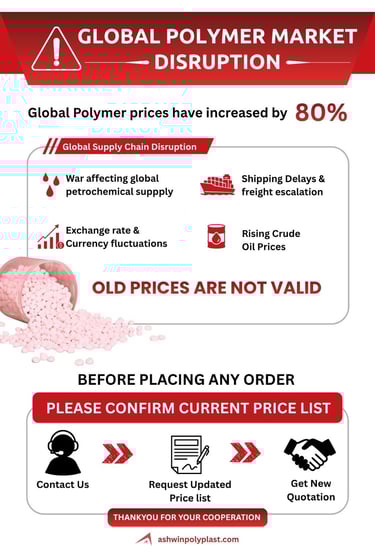
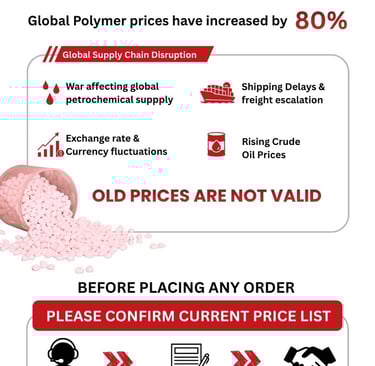
The sharp rise in petrochemical prices is largely a consequence of ongoing geopolitical tensions affecting global crude oil and natural gas supply chains. Major oil-producing regions have experienced disruptions due to conflicts, sanctions, and trade restrictions, which have significantly reduced the availability of crude oil in international markets. At the same time, increased energy demand, higher shipping and insurance costs, and limited refining capacities have further tightened supply. Since petrochemicals are directly derived from crude oil and gas, any fluctuation in these upstream resources immediately impacts the pricing of downstream products such as polymers.
Base polymers like LDPE, HDPE, PP, and BOPP — which are the fundamental raw materials for manufacturing virgin polybags — have seen substantial price increases as a result. The cost escalation is not only due to raw material scarcity but also due to increased production and transportation expenses. Manufacturers are facing higher procurement costs, inconsistent supply availability, and shorter pricing cycles, making it difficult to maintain stable pricing structures. In many cases, polymer prices have surged by up to 80%, creating significant pressure across the entire packaging supply chain.
This rise in input costs has a direct and unavoidable impact on the pricing of virgin polybags. Since raw materials account for a major portion of production costs, manufacturers are compelled to revise prices frequently to sustain operations. This has led to reduced price predictability, shorter quotation validity periods, and overall market volatility. For businesses dependent on virgin polybags, the current scenario emphasizes the importance of proactive procurement planning and adaptability in navigating fluctuating material costs.
CONTACT US
© 2023. All rights reserved.
Get in touch with us now via email, WhatsApp, or phone call.
Email:
Phone:
NEWSLETTER